888-984-3813

Case Study: Building a Culture of Safe Driving - How Hulett Environmental Services Made No-Distraction the Standard
For many pest control companies, distracted driving policies are introduced in response to rising insurance costs or a close call on the road. At Hulett Environmental Services, the approach has been different. For more than two decades, the company has made safe driving a core part of its operations - not as a compliance requirement, but as a cultural expectation.
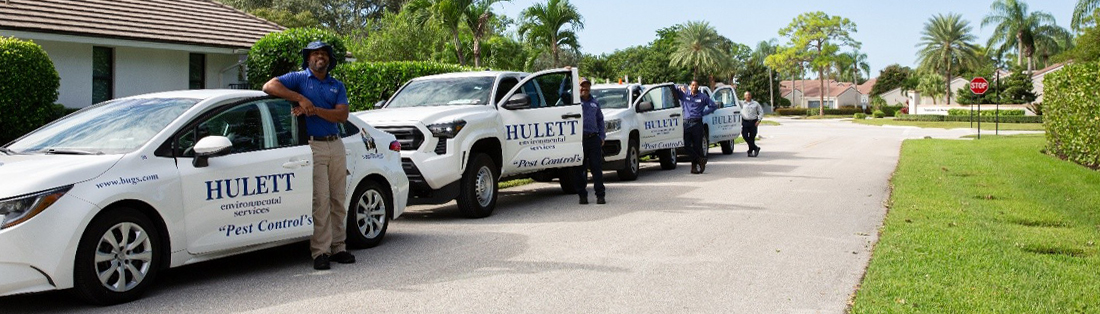
Today, with 212 employees and 161 vehicles operating across Florida’s east coast, Hulett’s long-standing commitment to eliminating distracted driving offers a clear example of what it takes to build - and sustain - a safety-first culture.
A 20-Year Commitment to Doing It Right
Hulett’s journey began more than 20 years ago with early in-vehicle monitoring technology. From the outset, leadership recognized that driving is not a secondary responsibility for technicians; it is a critical part of the job.
“Our technicians spend a lot of window time behind the wheel during the working day,” said Mike Fearns, vice president and general manager of Hulett’s Lawn and Pest Control Divisions. “We understood early on that if we were serious about protecting our employees and our customers, we needed to address driving behavior in a meaningful way.”
Over the years, Hulett has continuously evolved its approach, layering new technologies and refining processes without ever stepping away from its core commitment. Today, that includes a combination of video telematics and mobile device management tools, creating what Fearns describes as a “one-two punch” for safety.
“There’s never been a pause,” he said. “We’ve always had something in place to reinforce safe driving.”
From Policy to Way of Life
Like many companies, Hulett faced early resistance when implementing a strict no cell phone policy that extended well beyond phones.
Labor shortages continue to challenge pest control companies across the country. To keep routes covered, many businesses are expanding their hiring pool and bringing on first-time or less experienced drivers. While this approach can solve short-term staffing needs, it often introduces a different kind of risk - one that shows up quickly in claims, costs, and operational challenges.
As outlined in our February 2026 blog, The True Cost of Hiring Inexperienced Drivers, the early months behind the wheel are the most dangerous for new drivers . The good news is that many of these risks can be reduced before a new hire ever starts their first route by making smarter, experience-focused hiring decisions.
Experience Is a Risk Control, Not Just a Resume Line
When evaluating candidates, it is easy to prioritize availability, attitude, and willingness to work. While those traits matter, driving experience is one of the most important and often overlooked risk controls a company can use.
Research consistently shows that experience, not age, is the stronger predictor of crash risk. Drivers who have spent more time behind the wheel develop critical skills that cannot be replicated in a short onboarding period, including:
These are not just driving skills; they are loss prevention skills.
Reducing First-Month Mistakes
For pest control fleets, many of the most frequent and costly incidents occur within a driver’s first few months on the job. These include:
Experienced drivers are far less likely to make these early-stage mistakes because they have already encountered similar scenarios and developed the instincts to
Most of them are preventable.
Workplace Eye Wellness Month serves as an important reminder that vision protection is not optional PPE - it is essential risk control. For pest control technicians, eye hazards are part of the daily environment. Whether working in crawl spaces, attics, exterior perimeters or commercial facilities, flying debris, pesticide splashes, dust and protruding objects create constant exposure risks.
The Data Tells the Story
According to the Bureau of Labor Statistics (BLS), nearly three out of every five workers who suffered eye injuries were not wearing eye protection at the time of the accident.
Even more concerning, many who were injured were wearing the wrong type of protection - typically standard eyeglasses without side shields.
In pest control operations, that gap between “having eyewear” and “wearing the correct protection” can result in serious, and sometimes irreversible, injury.
Common Eye Injury Risks for Pest Control Technicians
Technicians routinely encounter multiple eye hazards during service calls, including:
These exposures can occur in seconds often while adjusting equipment, mixing product or navigating tight spaces.
Why Complacency Is the Real Hazard
Eye injuries rarely occur because employees were unaware of the risk. They happen because:
Consistent training and monitoring are critical components of an effective eye protection program. Reinforcement matters. Accountability matters.
Best Practices for Preventing Eye Injuries
1. Assess the Environment