888-984-3813

Increased traffic volume, summer travel, road construction, vacations, and more drivers on the road create conditions that contribute to a rise in crashes across the country.
While much of the attention surrounding the 100 Deadliest Days focuses on teenage drivers, the reality is that every driver faces increased risk during the summer months. For pest management companies, where technicians spend much of their workday behind the wheel, this seasonal increase in roadway hazards presents an important opportunity to reinforce safe driving behaviors.
Driving is often the most dangerous task a pest control professional performs each day. The good news is that many of the factors contributing to summer crashes can be addressed through awareness, preparation, and consistent coaching.
Why Summer Driving Requires Extra Attention
Summer creates unique challenges for service professionals. Roads are busier with vacation travelers, families heading to recreational activities, and drivers who may be unfamiliar with local traffic patterns. Road construction projects often peak during warmer months, leading to lane shifts, detours, and unexpected traffic congestion.
For pest management technicians, these conditions can increase pressure to stay on schedule while navigating unfamiliar routes, responding to customer requests, and managing a full day of appointments.
That combination of distractions, time pressure, and heavier traffic creates risk.
Focus on What You Can Control
While technicians cannot control traffic conditions, they can control their driving behaviors.
One of the most effective ways to reduce crash risk is to create more space between your vehicle and others on the road. Encourage technicians to maintain a safe following distance and increase that distance during heavy traffic, poor weather, or construction zones.
Speed management is equally important. Even small increases in speed reduce
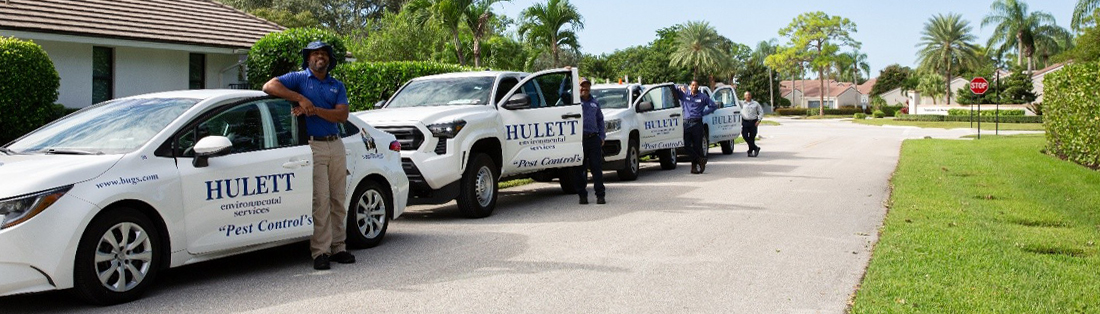
Case Study: Building a Culture of Safe Driving - How Hulett Environmental Services Made No-Distraction the Standard
For many pest control companies, distracted driving policies are introduced in response to rising insurance costs or a close call on the road. At Hulett Environmental Services, the approach has been different. For more than two decades, the company has made safe driving a core part of its operations - not as a compliance requirement, but as a cultural expectation.
Today, with 212 employees and 161 vehicles operating across Florida’s east coast, Hulett’s long-standing commitment to eliminating distracted driving offers a clear example of what it takes to build - and sustain - a safety-first culture.
A 20-Year Commitment to Doing It Right
Hulett’s journey began more than 20 years ago with early in-vehicle monitoring technology. From the outset, leadership recognized that driving is not a secondary responsibility for technicians; it is a critical part of the job.
“Our technicians spend a lot of window time behind the wheel during the working day,” said Mike Fearns, vice president and general manager of Hulett’s Lawn and Pest Control Divisions. “We understood early on that if we were serious about protecting our employees and our customers, we needed to address driving behavior in a meaningful way.”
Over the years, Hulett has continuously evolved its approach, layering new technologies and refining processes without ever stepping away from its core commitment. Today, that includes a combination of video telematics and mobile device management tools, creating what Fearns describes as a “one-two punch” for safety.
“There’s never been a pause,” he said. “We’ve always had something in place to reinforce safe driving.”
From Policy to Way of Life
Like many companies, Hulett faced early resistance when implementing a strict no cell phone policy that extended well beyond phones.
But as highlighted in a session at PestSure’s 2025 Safety and Loss Prevention Conference, many of the biggest exposures come from everyday decisions that don’t always feel like safety risks in the moment.
And often, those decisions are tied directly to time pressure.
When technicians and managers are trying to move faster, fit more into the day, or solve problems on the fly, they can unintentionally create risks that impact insurance coverage, claims outcomes and long-term costs.
As Abby Thalachelloor, PestSure’s director of claims, shared with attendees that every decision can have unforeseen consequences.
The Hidden Side of Risk
Not all exposures come from accidents. Many come from business practices that seem routine:
These aren’t isolated issues. They are operational decisions that, over time, can lead to costly claims.
Thalachelloor told attendees that companies are often paying for things we shouldn’t have to not because of bad intent, but because of gaps in process, communication or oversight.
Where Time Pressure Creates Exposure
Many of these risks are amplified when teams are rushed:
These shortcuts don’t just affect productivity. They directly impact your ability to defend a claim.
As Thalachelloor explained from a claims perspective, lack of documentation or verification can make a case difficult to defend
Full routes, customer expectations, seasonal surges, and travel between stops can create pressure to move faster and fit more into the day. But when time management slips, safety is often the first thing to go with it.
At PestSure, we see it time and again; rushed technicians are more likely to take shortcuts, skip steps, or overlook hazards. The result isn’t just reduced service quality. It’s increased risk for accidents, injuries, and costly claims.
The good news is that better time management doesn’t just improve productivity. It directly strengthens safety performance in the field.
Why Time Pressure Creates Risk
When technicians feel behind schedule, small decisions start to add up:
These aren’t intentional safety violations. They’re reactions to time pressure. And they’re exactly where many workplace injuries and auto claims begin.
Creating safer outcomes starts with giving technicians the tools and structure to manage their time effectively.
Start the Day with a Plan
A safe day begins before the first stop. Encourage technicians to review their route each morning and identify:
A few minutes of planning helps prevent rushed decisions later in the day. It also sets realistic expectations for what can be completed safely.
Build Time for Safety into Every Stop
Safety shouldn’t be an “extra step.” It should be part of the job.
Technicians should be trained and empowered to:
In the pest control industry, your fleet is always in motion. Technicians are navigating neighborhoods, responding to customer needs, and managing tight schedules all while operating a vehicle. That reality makes distracted driving, particularly cell phone use, one of the most significant and preventable risks facing your business.
At PestSure, we view safe driving not as a policy issue, but as a cultural commitment. Encouraging employees to take the pledge to drive phone-free is one of the most effective steps a company can take to reduce risk, protect employees, and strengthen long-term performance.
The Risk Is Real and Preventable
Distracted driving continues to be a leading cause of vehicle accidents, and mobile device use is at the center of that risk. In an industry where thousands of technicians are on the road every day, even a momentary lapse in attention can result in costly accidents, injuries, and liability exposure.
The good news is that this risk is controllable. As PestSure’s loss prevention philosophy emphasizes, prevention - not reaction - is what drives meaningful results.
Case Study Insights: What Works in the Field
Across the PestSure membership, leading companies are proving that a no cell phone policy is not only achievable, but highly effective.
At Ventura Pest Control, leadership recognized that simply having a policy in place was not enough. Early efforts were reactive, focused on discipline after incidents occurred. As co-owner Scott Moberly explained, “We disciplined people for poor driving, but we didn’t have a clear system to measure performance or reward good behavior.”
The company shifted its approach implementing technology, clear expectations, and a reward-based culture. The results were significant: a measurable reduction in at-fault accidents, stronger employee buy-in, and improved operational confidence.
Importantly, Ventura’s experience directly addresses a common concern among pest control owners: will a strict no
Labor shortages continue to challenge pest control companies across the country. To keep routes covered, many businesses are expanding their hiring pool and bringing on first-time or less experienced drivers. While this approach can solve short-term staffing needs, it often introduces a different kind of risk - one that shows up quickly in claims, costs, and operational challenges.
As outlined in our February 2026 blog, The True Cost of Hiring Inexperienced Drivers, the early months behind the wheel are the most dangerous for new drivers . The good news is that many of these risks can be reduced before a new hire ever starts their first route by making smarter, experience-focused hiring decisions.
Experience Is a Risk Control, Not Just a Resume Line
When evaluating candidates, it is easy to prioritize availability, attitude, and willingness to work. While those traits matter, driving experience is one of the most important and often overlooked risk controls a company can use.
Research consistently shows that experience, not age, is the stronger predictor of crash risk. Drivers who have spent more time behind the wheel develop critical skills that cannot be replicated in a short onboarding period, including:
These are not just driving skills; they are loss prevention skills.
Reducing First-Month Mistakes
For pest control fleets, many of the most frequent and costly incidents occur within a driver’s first few months on the job. These include:
Experienced drivers are far less likely to make these early-stage mistakes because they have already encountered similar scenarios and developed the instincts to
Most of them are preventable.
Workplace Eye Wellness Month serves as an important reminder that vision protection is not optional PPE - it is essential risk control. For pest control technicians, eye hazards are part of the daily environment. Whether working in crawl spaces, attics, exterior perimeters or commercial facilities, flying debris, pesticide splashes, dust and protruding objects create constant exposure risks.
The Data Tells the Story
According to the Bureau of Labor Statistics (BLS), nearly three out of every five workers who suffered eye injuries were not wearing eye protection at the time of the accident.
Even more concerning, many who were injured were wearing the wrong type of protection - typically standard eyeglasses without side shields.
In pest control operations, that gap between “having eyewear” and “wearing the correct protection” can result in serious, and sometimes irreversible, injury.
Common Eye Injury Risks for Pest Control Technicians
Technicians routinely encounter multiple eye hazards during service calls, including:
These exposures can occur in seconds often while adjusting equipment, mixing product or navigating tight spaces.
Why Complacency Is the Real Hazard
Eye injuries rarely occur because employees were unaware of the risk. They happen because:
Consistent training and monitoring are critical components of an effective eye protection program. Reinforcement matters. Accountability matters.
Best Practices for Preventing Eye Injuries
1. Assess the Environment
One misstep. One shortcut. One unstable ladder.
That’s all it takes for a serious injury or worse.
In 2025, OSHA ranked ladders as the #3 most cited safety violation, with 2,405 total violations. Despite decades of awareness, ladder misuse continues to endanger workers, and too many job sites are still repeating the same preventable mistakes.
For pest control companies, ladder safety is not theoretical. Technicians regularly access attic spaces, rooflines, exterior eaves and multi-story structures. That makes ladder-related fall prevention a core risk management issue, not just a compliance topic for National Ladder Safety Month.
Why Ladder Safety Still Matters in Pest Control
Falls remain one of the leading causes of workplace injuries across construction and field service industries. For pest control companies, a single ladder-related incident can trigger:
In other words, improper ladder use affects both people and profitability.
The Real Problem: Familiarity Breeds Complacency
Most ladder injuries do not happen because employees lack access to safety rules. They happen because:
These are not complex violations. They are routine shortcuts. That is why structured training and reinforcement matter.
Five High-Impact Ladder Safety Controls
Rather than repeating generic safety reminders, companies should focus on controls that measurably reduce risk.
1. Standardize Ladder Selection
Require technicians to use the correct ladder type and load rating for every task. Extension ladders must extend at least 3 feet beyond a landing surface. Never allow work from the top three rungs of an extension ladder.
Document ladder specifications in your fleet and
In today’s pest control industry, hiring decisions carry more weight than ever. Labor shortages, seasonal spikes in demand and growth goals often push companies to move quickly when filling open positions. But when it comes to fleet safety, workplace injuries and long-term risk, who you hire - and how you hire - has a direct correlation to your loss history, insurance costs and overall operational stability.
At PestSure, we consistently see a strong connection between structured hiring practices and improved safety outcomes. The companies that treat hiring as a frontline risk management function often outperform their peers in auto, general liability and workers’ compensation performance.
Safety Starts Before Day One
Safety does not begin at orientation. It begins during recruitment.
Clear job descriptions should outline not only driving expectations, but also physical demands, ladder usage, pesticide handling responsibilities and customer-facing accountability standards. When expectations are communicated early, applicants self-select and the likelihood of poor fit decreases.
Pre-employment screening is equally critical. This includes:
Companies that skip or rush these steps assume unnecessary exposure. A single at-fault accident, ladder fall or misapplication incident tied to a preventable hiring oversight can impact your loss ratio for years.
Experience Matters; Structure Matters More
While experienced technicians may present lower initial risk, experience alone does not guarantee safe behavior behind the wheel or on the jobsite. A structured onboarding process closes the gap between hiring and performance.
High-performing pest control companies implement:
Labor shortages have pushed many pest control companies to widen the hiring net, often bringing in younger or first-time commercial drivers to keep routes covered. In the short term, it allows companies to fully staff routes and maintain growth, but when it comes to fleet risk, novice drivers can quietly introduce costs that far exceed payroll savings.
For pest control business owners and managers, understanding how inexperience impacts claims, losses, training demands, and long-term insurability is critical to protecting both people and profits.
Why Inexperience Matters More Than Age
It’s easy to assume risk is tied primarily to age, but research from the National Surface Transportation Safety Center for Excellence at Virginia Tech Transportation Institute, consistently shows that experience is the stronger predictor of crashes.
Here’s what pest control owners and managers should understand.
1. Hazard Recognition Takes Time to Develop
Experienced drivers anticipate problems. Novice drivers react to them. New drivers often struggle with:
In a pest control setting, this commonly leads to:
The ability to anticipate risk improves with time - but early-stage drivers have not yet built that instinct.
2. Distraction Is a Significant Exposure
Today’s technicians increasingly rely on mobile tools to do their job:
Novice drivers are especially vulnerable to distraction because they have not yet automated basic driving behaviors. When attention shifts to a device, hazard awareness drops dramatically.
Distracted driving remains one of the most common contributors to severe liability claims and that is why PestSure has implemented a cell phone free policy with its insureds.
3. Fleet Vehicles Are Different from Personal Cars
Most new