
888-984-3813

Case Study: Building a Culture of Safe Driving - How Hulett Environmental Services Made No-Distraction the Standard
For many pest control companies, distracted driving policies are introduced in response to rising insurance costs or a close call on the road. At Hulett Environmental Services, the approach has been different. For more than two decades, the company has made safe driving a core part of its operations - not as a compliance requirement, but as a cultural expectation.
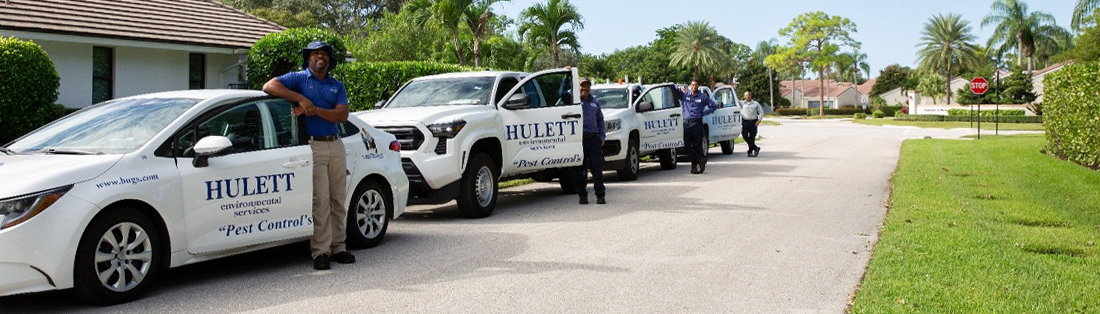
Today, with 212 employees and 161 vehicles operating across Florida’s east coast, Hulett’s long-standing commitment to eliminating distracted driving offers a clear example of what it takes to build - and sustain - a safety-first culture.
A 20-Year Commitment to Doing It Right
Hulett’s journey began more than 20 years ago with early in-vehicle monitoring technology. From the outset, leadership recognized that driving is not a secondary responsibility for technicians; it is a critical part of the job.
“Our technicians spend a lot of window time behind the wheel during the working day,” said Mike Fearns, vice president and general manager of Hulett’s Lawn and Pest Control Divisions. “We understood early on that if we were serious about protecting our employees and our customers, we needed to address driving behavior in a meaningful way.”
Over the years, Hulett has continuously evolved its approach, layering new technologies and refining processes without ever stepping away from its core commitment. Today, that includes a combination of video telematics and mobile device management tools, creating what Fearns describes as a “one-two punch” for safety.
“There’s never been a pause,” he said. “We’ve always had something in place to reinforce safe driving.”
From Policy to Way of Life
Like many companies, Hulett faced early resistance when implementing a strict no cell phone policy that extended well beyond phones. The policy prohibits eating or drinking while driving, requires GPS to be programmed before putting the vehicle in Drive, mandates the Do Not Disturb feature on all devices, and even requires drivers to update their voicemail greeting to explain the company's policy to callers. At the time, enforcing the policy - particularly on personal devices - presented challenges.
But leadership stayed the course.
“At the beginning, there were obstacles,” Fearns said. “It wasn’t easy to enforce, and there was pushback. But over time, the message got through.”
That persistence has paid off. Today, the policy is no longer viewed as a rule - it is part of how the company operates.
“It’s a way of life now,” Fearns said. “It starts at the top, and it starts on day one for every new employee.”
Safe driving is embedded into training from day one, including a 15–20 day structured field training program, certified field trainers (CFT) in each department, a formal graduation checklist signed off by the department manager and CFT before any new hire drives solo. Safe driving expectations are reinforced through weekly and monthly team meetings, leaving no doubt about the company's commitment.
Leadership, Accountability and Tough Decisions
A critical factor in Hulett’s success has been leadership alignment and a willingness to make difficult decisions.
“There were times when we had to let people go,” Fearns said. “Even experienced employees who couldn’t change their habits. That’s never easy, but it was necessary.”
The numbers back that up. In the past year alone, Hulett terminated several employees for distracted driving violations including a top-performing sales employee and a technician with more than a decade of tenure.
That level of accountability sends a clear message throughout the organization. Safe driving is not optional, and it is not negotiable.
Danny Nehemias, Hulett’s director of operations, emphasized the importance of maintaining that standard.
“As a company, we have to keep our fleet insured and protect our people,” Nehemias said. “Sometimes that means having hard conversations. But the message is always the same - we’re here to keep you safe.”
Human resources, operations and executive leadership all play a role in reinforcing the policy, creating a shared responsibility across the organization.
Technology as an Enabler
While culture is the foundation, technology has played a key role in helping Hulett scale and sustain its program.
The company uses a combination of video telematics and mobile device management tools to monitor and coach driver behavior. Metrics such as mobile device usage, hard braking, aggressive turns, seatbelt compliance and signs of fatigue are tracked and reviewed daily.
“If we see a pattern, we act quickly,” Fearns said. “The data gives us visibility, and that allows us to coach in real time.”
Nehemias noted that the technology has also made the process more manageable for service managers.
“At first, it was overwhelming,” he said. “Each manager is responsible for 10 to 12 technicians, and reviewing all that data manually was time-consuming. Now, the platforms give us a clear snapshot. We can customize what we look at and focus on what matters most.”
The result is a more efficient, proactive approach to safety management - one that reduces administrative burden while improving outcomes.
Measurable Results
Hulett’s long-term investment in safety is delivering measurable results.
Public complaint calls about Hulett drivers have dropped from 19 in 2024 to just one year-to-date in 2026. Manager-led coaching incidents fell by two-thirds year over year. The trend is clear and consistent.
Nehemias pointed to another important indicator: responsiveness to customer feedback.
“When a complaint comes in, we take it seriously,” he said. “We respond immediately, from HR to the executive team. Our vehicles are moving billboards, and how our employees drive reflects directly on our brand.”
Reinforcing Behavior Through Transparency and Recognition
One of the most effective tools in Hulett’s program has been transparency.
Driving scores are visible to technicians in real time, creating a sense of accountability and encouraging peer-to-peer motivation.
“When everyone can see the scores, it changes behavior,” Fearns said. “There’s a natural push to improve.”
At the same time, the company emphasizes coaching and reward over punishment. That philosophy is working. Coaching incidents and public complaints have both fallen sharply, pointing to a workforce that is internalizing the standard rather than simply complying with it.
Hulett also presents cash awards of $500, $400, and $300 to its top safe drivers, with winners recognized in the company newsletter and at a dedicated driver recognition breakfast among peers.
“This is not a yelling culture,” Nehemias said. “It’s about mentoring and helping employees improve. The technology allows us to coach to the individual.”
Addressing Industry Concerns
For companies considering implementing or expanding a no cell phone policy, concerns about productivity and sales are common. Hulett’s experience suggests those concerns are misplaced.
“Early on, people worried about losing productivity,” Fearns said. “But that didn’t happen once the policy was in place and people adapted.”
Instead, the company has found that focusing on safety leads to better overall performance.
Rather than dampening morale, Hulett has found that a strong safety culture creates engagement. The company’s rewards and recognition in the company newsletter signal that safety performance is valued just as highly as technical results.
“If you want to stay in business, you need to do this,” Fearns said. “One bad incident can have a lasting impact. It’s not worth the risk.”
Advice for Other Operators
Hulett’s message to other pest control companies is straightforward: start now and stay committed.
“Be patient and persistent,” Fearns said. “It takes time to build this kind of culture. You have to weather the storm in the beginning.”
Nehemias added that success depends on alignment across the organization.
“You need everyone involved - operations, HR and leadership,” he said. “It has to be a collective effort.”
A Culture That Protects What Matters Most
At its core, Hulett’s approach is about more than policies and technology. It is about protecting people.
Fearns recalled a moment that reinforced the importance of the company’s efforts.
“About 10 years ago, the spouse of one of our employees thanked us for focusing on safe driving,” he said. “That stuck with me. It’s not just about the business - it’s about making sure our employees get home safe.”
That perspective continues to guide Hulett’s approach today.
In an industry where driving is an everyday reality, the company has demonstrated that safety can become second nature - not through shortcuts or quick fixes, but through consistent leadership, the right tools and a long-term commitment to doing what is right.
Terms & Conditions
Subscribe
Report
My comments